If you love the idea of living near the sand but do not love the upkeep that comes with a detached home, condo living in Manhattan Beach may be worth a close look. This small coastal city packs a lot into just 3.88 square miles, which means location, building style, and day-to-day logistics can shape your experience more than you might expect. In this guide, you will learn where condos are typically found, what tradeoffs come with the lifestyle, and how to decide if a Manhattan Beach condo fits the way you want to live. Let’s dive in.
Why Manhattan Beach Condos Stand Out
Manhattan Beach is compact, built out, and in high demand. The city notes that only a few small vacant parcels remain, so much future housing growth will need to come from redevelopment of already developed sites, not large new neighborhoods. You can read more on the city’s Manhattan Beach facts page.
That matters because condo inventory is not spread evenly across a large city. Instead, it tends to cluster in a few areas where multifamily and mixed-use development already exists or may expand over time. For you as a buyer, that means your condo search is often less about choosing from every part of Manhattan Beach and more about choosing the right pocket within a small, tightly defined market.
Where Condo Living Is Most Common
Beach Area and Downtown
The Beach Area contains much of the city’s multi-family rental housing, and Downtown Manhattan Beach is the city’s walkable shopping and dining core near the beach. If your ideal day includes being able to head out on foot for coffee, dinner, or a walk to the sand, this part of town may feel especially appealing. The city highlights Downtown as a beach-adjacent destination for shopping and dining in its visitor guide to Manhattan Beach.
That said, convenience comes with tradeoffs. The city also notes that parking in the Beach Area is in short supply for both residents and visitors. If you are considering a condo near Downtown or the beach, parking deserves just as much attention as the finishes inside the unit.
East Side and Manhattan Village
The East-Side/Manhattan Village planning area includes a large share of the city’s commercial and residential uses. According to the city’s housing element, medium- and high-density residential development is located along Manhattan Beach Boulevard, Artesia Boulevard, and near Manhattan Village, and Manhattan Village contains a significant number of condominium units.
For many buyers, this area can offer a different kind of convenience. You may find condo options that are more connected to major streets and everyday services, rather than being centered on beach-adjacent walkability alone.
North End and El Porto
The North End commercial area runs along Highland Avenue and Rosecrans Avenue between 33rd and 42nd Streets, where residential uses can also be developed at high-density standards. El Porto, north of 38th Street between the ocean and El Segundo, has the highest residential development intensities in the city.
If you want a coastal location and are open to a denser setting, these areas may be relevant to your search. As always in Manhattan Beach, the exact building, parking setup, and street location can have a big impact on how a property lives day to day.
Sepulveda and Rosecrans Corridors
The city’s Residential Overlay District places many eligible multifamily and mixed-use redevelopment sites along Sepulveda Boulevard and Rosecrans Avenue. In practical terms, that suggests future condo-style supply is more likely along commercial corridors than deep within the primarily single-family sections of the city.
This is especially important if you are hoping to find newer or redeveloped condo product over time. Hill Section and Tree Section remain primarily single-family, so condo choices there are generally more limited.
What Manhattan Beach Condos Usually Look Like
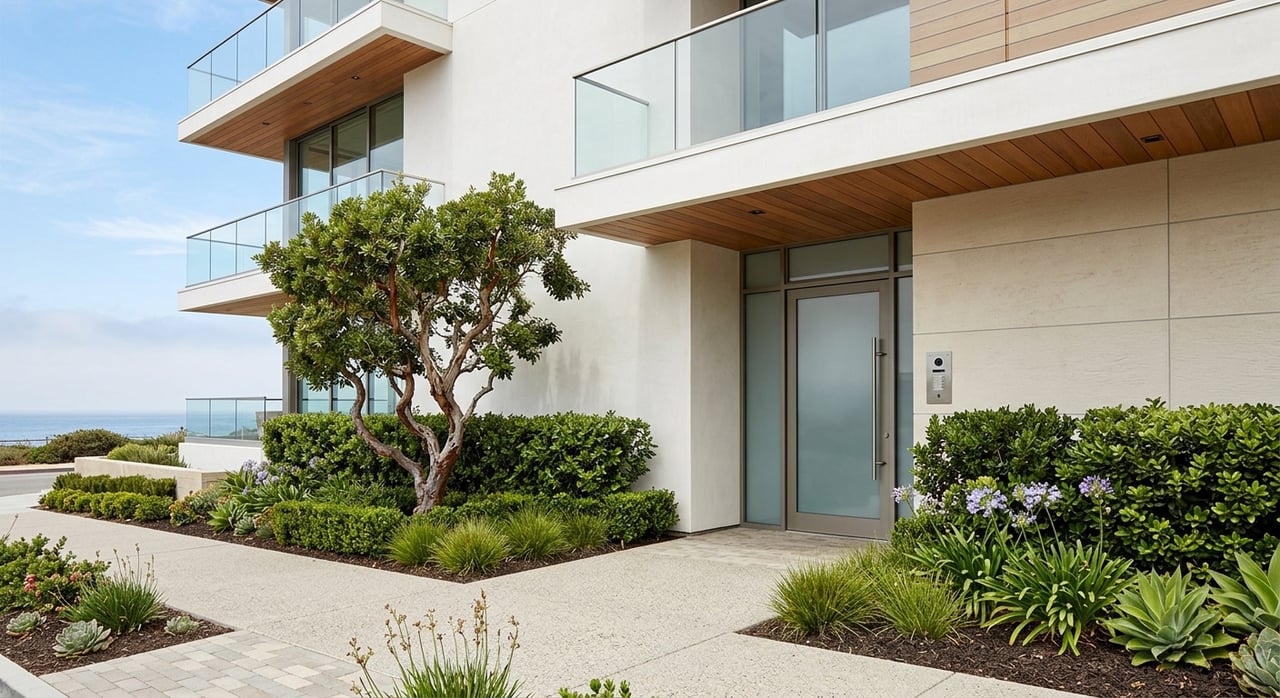
If you are picturing a high-rise tower with resort-style amenities, Manhattan Beach may surprise you. Local zoning generally allows 30-foot buildings with up to three stories in applicable districts, which helps explain why condo product here tends to be low-rise rather than vertical tower living.
In many cases, condo and townhome-style homes in Manhattan Beach are relatively compact and often built around two-bedroom layouts. Based on the research provided, that means your search may focus more on efficient coastal living and smaller-scale buildings than on oversized amenity-heavy communities.
For some buyers, that is a plus. A lower-rise building can feel more residential and in scale with the surrounding neighborhood pattern.
Why Condo Living Appeals to Buyers Here
The biggest draw is simple: location. Manhattan Beach offers beach access, a well-known pier, a compact layout, and a downtown district close to the shoreline. If you want a coastal address without taking on all the exterior responsibilities of a standalone home, a condo can be a practical option.
Condo living can also mean a more shared approach to maintenance. Under California law, common-interest associations are responsible for levying assessments sufficient to perform their obligations, which is part of why common-area upkeep is handled collectively instead of by each owner individually.
For many lifestyle buyers, that trade can make a lot of sense. You may give up some private outdoor space, but you may also spend less time thinking about exterior maintenance and more time enjoying the beach-city setting.
Key Tradeoffs to Think Through
Parking Can Be a Real Issue
In Manhattan Beach, parking is not a small detail. The city states that the Beach Area has a short supply of resident and visitor parking, and downtown commercial parking permits are oversubscribed. A permit also does not guarantee a space.
The city further notes that overnight residential permits are limited to certain public lots, and that some downtown override rules apply only to approved streets. Before you buy, it is smart to ask very specific questions about:
- Garage dimensions
- Number of assigned spaces
- Guest parking availability
- Street parking rules
- Permit eligibility
- Storage for bikes, boards, or larger vehicles
In a tight coastal market, parking can shape your daily routine as much as square footage.
HOA Costs Need a Close Review
Monthly dues are only part of the picture. California Civil Code Section 5600 explains that associations must levy regular and special assessments sufficient to meet their obligations. It also sets general limits on board actions without member approval, including restrictions on certain increases to regular assessments and special assessments. You can review the statute in California Civil Code Section 5600.
For you, the takeaway is practical. Review HOA dues, reserve health, recent repairs, deferred maintenance, and the chance of future special assessments just as carefully as you review the purchase price and loan payment.
Short-Term Rental Flexibility Is Limited
If part of your plan is to use a condo as a second home with occasional Airbnb-style income, verify the rules before you get too far. The city’s short-term vacation rental page states that short-term rentals are banned outside the Coastal Zone as of early 2026, though the city had been considering a temporary allowance outside the Coastal Zone for the 2026 FIFA World Cup.
The city also states that operators need a business license and must remit transient occupancy tax. In other words, rental flexibility should never be assumed. It needs to be confirmed property by property.
Who Condo Living Fits Best
Condo living in Manhattan Beach is often a strong fit if you want:
- A beach-close address
- Walkability to shops or dining
- Lower exterior maintenance than a detached home
- A smaller, more manageable footprint
- A lifestyle-oriented purchase in a compact coastal city
It may be a weaker fit if you need:
- Easy, abundant parking
- Large private outdoor space
- A bigger home footprint
- Flexible short-term rental use
The right fit comes down to how you live. If your priority is being close to the beach and enjoying Manhattan Beach with fewer maintenance demands, a condo may check the right boxes.
Questions to Ask Before You Buy
Before writing an offer, it helps to get beyond the listing photos and focus on how the property works in real life. A few smart questions can save you time and help you compare options more clearly.
Ask about:
- The HOA’s monthly dues and what they cover
- Reserve funding and recent special assessments
- Parking for owners and guests
- Building rules on pets, move-ins, and renovations
- Whether the property is in the Coastal Zone
- Any known redevelopment activity nearby
- Laundry, storage, and outdoor space details
This is where local guidance matters. In a market as compact and nuanced as Manhattan Beach, small details can make a big difference in long-term satisfaction.
The Bottom Line on Manhattan Beach Condo Living
Manhattan Beach condo living can be a great match if you value beach access, a convenient coastal lifestyle, and a lower-maintenance ownership experience. Because the city is small, built out, and parking-constrained in key areas, the decision is rarely just about the unit itself. It is also about the block, the building, the HOA, and the rules that shape daily life.
If you are weighing condo options in Manhattan Beach and want a thoughtful local perspective on lifestyle fit, building tradeoffs, and value, Cheryl-Lynn & Robert Real Estate can help you navigate the details with clarity and care.
FAQs
Is condo inventory common throughout Manhattan Beach?
- No. Condo supply tends to be concentrated in specific areas such as the Beach Area, Downtown, East Side, Manhattan Village, North End, El Porto, and certain commercial corridors rather than throughout the entire city.
What does Manhattan Beach condo living usually look like?
- Most condo product in Manhattan Beach tends to be low-rise rather than tower-style, often in buildings up to three stories, with many compact layouts and two-bedroom-style configurations.
Why is parking important when buying a condo in Manhattan Beach?
- The city identifies parking as a major constraint, especially in the Beach Area and near Downtown, so you should carefully review assigned parking, guest parking, garage size, and street-parking rules.
How should you evaluate HOA fees for a Manhattan Beach condo?
- You should look beyond the monthly amount and review what the dues cover, the association’s reserve health, any recent repairs, and the potential for future special assessments.
Can you use a Manhattan Beach condo as a short-term rental?
- Not always. The city states that short-term rentals are banned outside the Coastal Zone as of early 2026, so you should confirm the property’s location and rules before assuming that strategy will work.
Who is Manhattan Beach condo living best suited for?
- It is often best for buyers who prioritize beach access, walkability, and lower-maintenance ownership over larger private outdoor space, abundant parking, or broad short-term rental flexibility.