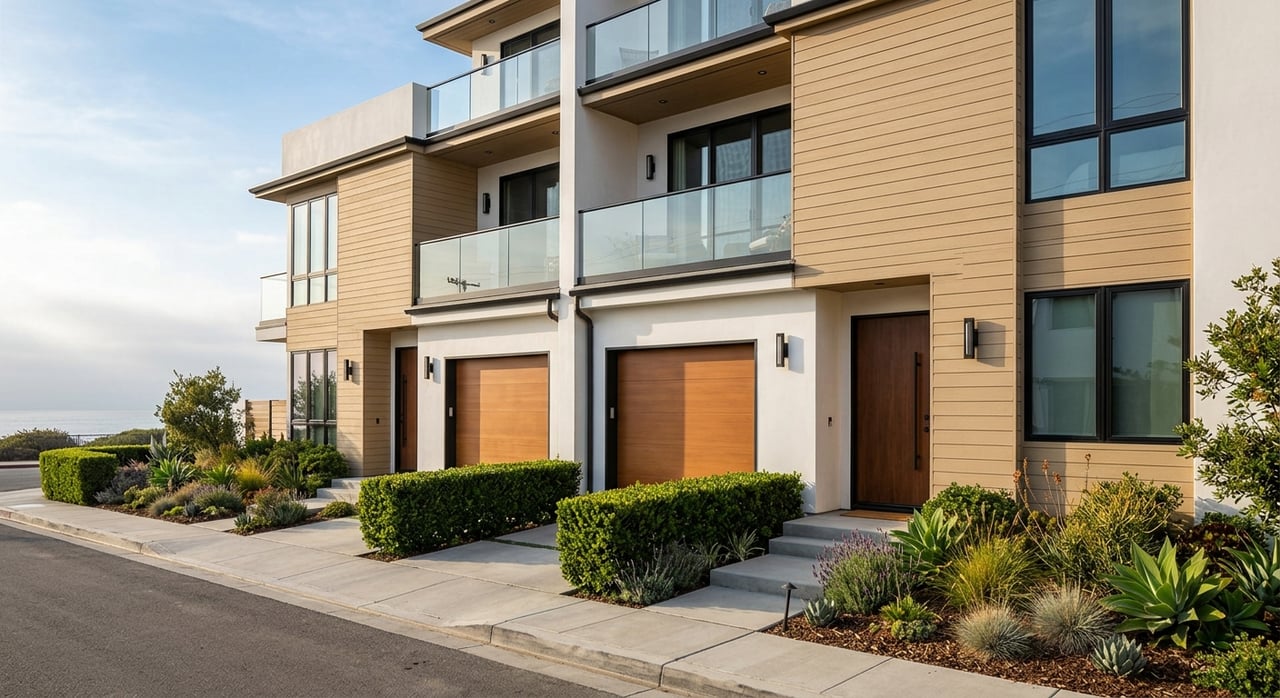
Buying a duplex in Redondo Beach can look simple on paper until you start pricing land, parking, rents, and local rules. If you are hoping to add an income property in a coastal market, you need more than a quick cap-rate estimate or a beach-city headline. This guide will help you think through the numbers, the location tradeoffs, and the city-specific issues that matter most before you buy. Let’s dive in.
Why Redondo Beach Draws Investors
Redondo Beach is a small coastal city with limited land, strong household income, and meaningful rental demand. According to the U.S. Census QuickFacts for Redondo Beach, the city spans just 6.21 square miles, has 68,075 residents, 28,307 households, and a median household income of $150,245.
That combination matters because it often supports stable housing demand while keeping inventory tight. The same Census profile also reports a median gross rent of $2,691 and a 53.4% owner-occupied housing rate, which helps frame Redondo Beach as a market where both ownership and rental housing compete for limited space.
For duplex buyers, that usually means high entry pricing, limited supply, and strong competition for well-located properties. It can be an attractive setup, but only if your underwriting is disciplined.
What Rents Look Like Today
Current rent data shows why investors keep Redondo Beach on their radar. Zillow reports Redondo Beach at about $3,253 average asking rent and $3,428 average observed rent as of March 2026, with 2-bedroom units around $3,300 and 3-bedroom units around $5,456.
Those numbers also help you compare Redondo Beach with nearby South Bay cities. In the same Zillow data, Torrance sits lower at $2,692, while Hermosa Beach and Manhattan Beach are notably higher. In practical terms, Redondo Beach often lands in a middle zone where rents are still premium, but the pricing structure may feel more approachable than some nearby beach enclaves.
That said, rent growth should be modeled carefully. Northmarq’s Q4 2025 Los Angeles market report notes South Bay asking rents at $2,321 per month in Q4 2025, with vacancy at 4.5% and more than 1,100 units projected for delivery in 2026. That is a good reminder not to rely on aggressive future rent increases to make a deal work.
How To Think About Cap Rates
If you want a simple benchmark, Redondo Beach duplex investing should be viewed in the context of the broader South Bay small multifamily market. Northmarq reports that South Bay average cap rates were about 5.75% in 2025, up from the lower cap-rate environment seen from 2020 through 2023.
That is useful because it gives you a reasonable market frame. In today’s environment, a duplex trading materially below that level may reflect stronger location or better condition, while a higher cap rate may point to added risk, deferred maintenance, or less stable income.
You should also remember that many traded assets are older. The same Northmarq report says the median sale price per unit in 2025 was $327,100 and that many transactions involved Class C assets built in the 1960s. For you, that means repairs, parking functionality, and tenant-related rules may matter just as much as the purchase price.
North Redondo Vs South Redondo
One of the biggest decisions is not just whether to buy in Redondo Beach, but where in Redondo Beach. The city identifies a clear split at 190th Street, with North Redondo generally more inland and residential, while South Redondo includes the pier and harbor area and more of the classic coastal-location appeal, based on the city budget overview.
For investors, that split often shows up in both pricing and strategy. Redfin’s March 2026 market data for North Redondo shows a median sale price of $1,572,500 and a median time on market of 36 days, while South Redondo posted a median sale price of $1,877,500 and a median time on market of 32 days. That puts South Redondo roughly 19.4% higher by median sale price.
Both areas remain competitive, and both average about two offers per home. In broad terms, North Redondo often appeals to investors focused on entry basis, function, and commuter access, while South Redondo often attracts buyers willing to pay more for location profile, coastal appeal, and long-term resale strength.
North Redondo Investment Profile
North Redondo can make sense if you are focused on better basis and practical site layout. Its more inland setting and grid-style streets may offer opportunities where parking access and daily usability are easier to evaluate.
That does not automatically make North Redondo cheap. It simply means the value equation may lean more toward income and functionality than prestige pricing.
South Redondo Investment Profile
South Redondo usually carries a stronger location premium. Proximity to the pier, harbor, and coastal setting can support long-term desirability, but that premium can compress yield at the time of purchase.
This is often where investors need to be especially honest with themselves. If you are buying for appreciation potential, location prestige, or a long hold in a prime coastal area, South Redondo may fit. If you need stronger day-one income performance, your math may be tighter.
Zoning Matters More Than Many Buyers Expect
Before you assume a duplex parcel can be expanded or repositioned, verify the actual land-use rules for that specific property. The city’s 2024 Land Use Element lists R-2 at up to 14.6 dwelling units per acre and R-3 at up to 17.5 dwelling units per acre, and notes that those designations can allow single-family homes, duplexes, townhomes, condominiums, and apartments.
There is an important catch, though. The same document explains that a residential overlay area can control the maximum density instead of the base zone. That means you should not assume the base zoning tells the whole story.
For a duplex investor, this is where mistakes can get expensive. A parcel that looks like a future value-add opportunity may have constraints that affect density, layout, timing, or feasibility.
Parking And Access Can Change The Deal
In Redondo Beach, parking is not a minor detail. It can directly affect design, utility, and future improvement plans.
The city’s objective residential standards prefer alley access where available, limit some curb cuts and driveway aprons on narrow lots, and do not allow front-loaded garages in the front half of the lot. The city also requires two enclosed parking spaces for R-2 and R-3 units, with visitor parking minimums in some cases on wider lots.
That means a duplex with awkward access or limited site circulation can be harder to improve than buyers first assume. If you are comparing two similar properties, the one with cleaner parking and access may be the better long-term investment even if the unit count is the same.
Coastal Zone Rules Can Add Another Layer
Not every Redondo Beach duplex has the same approval path. If a property is within the coastal area, the Local Coastal Program can add another layer of review, according to the city’s Land Use Element.
This is especially relevant in South Redondo. Two properties in the same city can carry very different timelines and entitlement complexity depending on coastal-zone status.
For investors, that affects more than paperwork. It can influence hold time, carrying costs, design assumptions, and the timing of any future renovation or redevelopment plan.
Do Not Underwrite Short-Term Rental Income
This is one of the clearest rules in Redondo Beach. The city states that short-term rentals of 30 days or less are not permitted in single-family and multi-family residential zones.
That means your underwriting should be built around conventional long-term housing, not vacation-rental projections. If a deal only works because of short-term rental income, it is not a conservative Redondo Beach duplex investment.
Understand Tenant Protection Rules
California’s Tenant Protection Act guidance is another key piece of the puzzle. The state explains that many covered units are subject to rent increase caps of 5% plus inflation, or 10% total, whichever is lower, and that just-cause protections can apply after the relevant tenancy threshold.
The same guidance also requires formal written notice for rent increases. For you, that means older duplexes should be modeled with realistic rent-reset assumptions and a clear understanding of process, timing, and compliance.
This is especially important if you are buying a property with below-market rents. Upside may exist, but it may take longer to realize than a quick spreadsheet suggests.
A Smart Duplex Underwriting Checklist
Before you move forward on a Redondo Beach duplex, focus on a few local risk controls:
- Verify the parcel’s zoning and whether an overlay affects density.
- Confirm whether the property is in the coastal area.
- Review parking layout, alley access, curb-cut limitations, and enclosed-space requirements.
- Do not include short-term rental income in your projections.
- Check whether the units are covered by the Tenant Protection Act.
- Use conservative rent-growth assumptions given current South Bay supply and vacancy trends.
- Budget for maintenance carefully, especially with older 1960s-era stock.
A checklist like this will not remove risk, but it can help you avoid the most common underwriting mistakes in this market.
When A Redondo Beach Duplex Makes Sense
A duplex in Redondo Beach can make sense if you value coastal location, durable rental demand, and long-term ownership in a supply-constrained market. It can also be attractive if you are willing to work through the details that many casual buyers overlook, especially zoning, parking, tenant rules, and coastal-area nuance.
In our experience, the strongest opportunities are often the ones where the property’s practical limitations are understood early. That gives you a clearer view of basis, renovation scope, rental strategy, and resale potential before you commit.
If you are weighing duplex opportunities in Redondo Beach and want a local, data-driven perspective on pricing, rent comps, and property-specific tradeoffs, connect with Cheryl-Lynn & Robert Real Estate. Their boutique South Bay approach can help you evaluate whether a property fits your investment goals and where the real risk, and opportunity, may be.
FAQs
What makes duplex investing in Redondo Beach different from other South Bay markets?
- Redondo Beach combines limited land, premium rents, and city-specific zoning, parking, and coastal-area rules, so property-level due diligence tends to matter more than broad market averages.
Is North Redondo or South Redondo better for duplex investors?
- North Redondo often offers a more basis-conscious, function-driven investment profile, while South Redondo usually carries a stronger location premium and may appeal more to buyers focused on long-term prestige and resale appeal.
Can you use a Redondo Beach duplex as a short-term rental?
- No. Redondo Beach does not permit short-term rentals of 30 days or less in single-family and multi-family residential zones.
Do zoning rules affect duplex redevelopment in Redondo Beach?
- Yes. Base zoning, residential overlay rules, parking requirements, and coastal-area review can all affect what you can do with a duplex parcel.
Should you assume strong rent growth for a Redondo Beach duplex?
- Conservative rent-growth assumptions are generally more prudent because South Bay vacancy and new supply trends suggest a disciplined, not explosive, rent environment.
What should you review before buying a duplex in Redondo Beach?
- You should review zoning, overlay status, coastal-area status, parking and access layout, tenant protection coverage, current rents, and likely maintenance needs before finalizing your numbers.