If you are choosing between coastal bluffs and canyons in Rancho Palos Verdes, you are really choosing between two different daily rhythms. One leans open, ocean-facing, and weather-exposed. The other feels more tucked into the hills, shaped by topography, shade, and trail access. Understanding those differences can help you focus your home search, or position your property more clearly if you plan to sell. Let’s dive in.
Rancho Palos Verdes Is Shaped by Terrain
Rancho Palos Verdes is a hillside city, and the landscape has a real impact on how each area feels. According to the city’s General Plan, slopes range from about 5% to more than 35%, and roughly 40% to 50% of the land falls into steep-slope categories of 25% or more.
That terrain creates noticeable variation across the city. Rancho Palos Verdes also identifies three local climate zones: the coastal zone, the upper west face of the hill, and the middle highlands and eastern upper slopes. In practical terms, that means one part of the city can feel breezy, bright, and exposed, while another feels more sheltered and varied.
The preserve system adds even more contrast. The Palos Verdes Nature Preserve includes roughly 1,400 to 1,500 acres of open space and more than 30 miles of trails through rolling hills, steep canyons, and rock outcrops, rising from sea level near the coast to about 1,300 feet inland.
What Coastal Bluff Living Feels Like
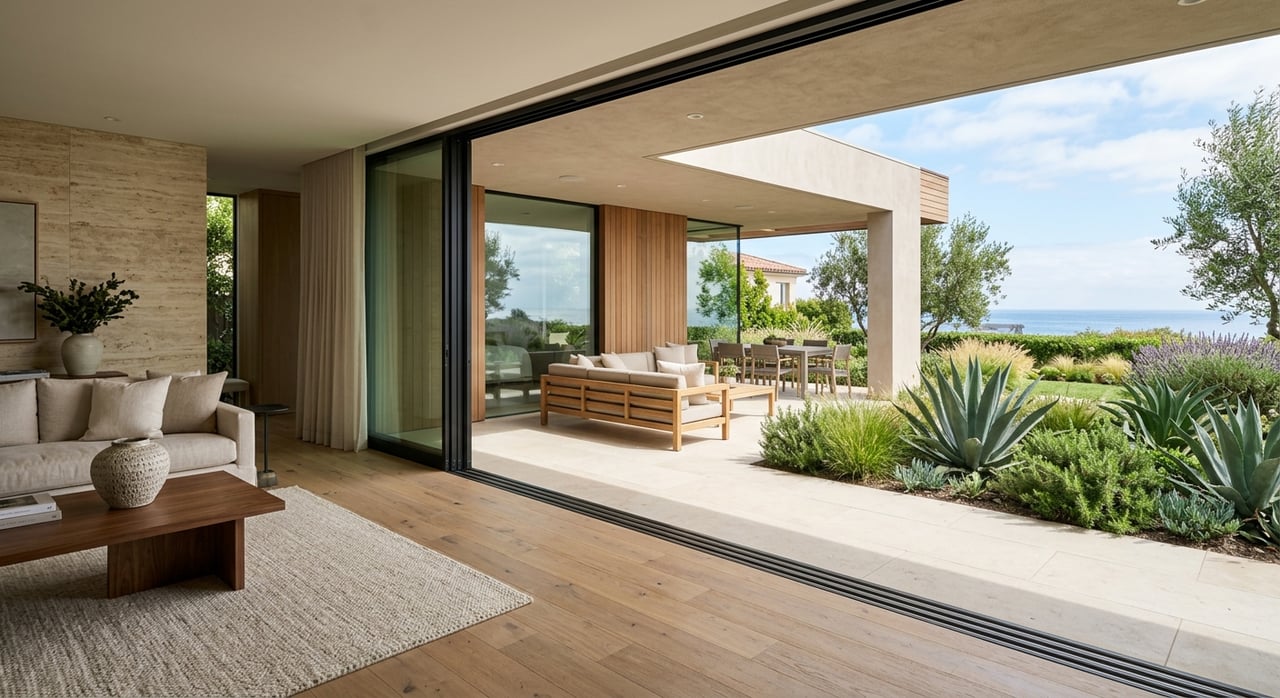
Bluff-top living in Rancho Palos Verdes is often what people picture first. It is defined by open sky, wide ocean outlooks, and a stronger connection to marine weather.
In the city’s coastal climate zone, Point Vicente is described as slightly windier, cooler, and foggier than other coastal areas, while other parts of the coast are somewhat more sheltered. If you are drawn to that classic bluff-edge setting, this exposure is often part of the appeal.
Public spaces reinforce that feeling. Areas like Vicente Bluffs Reserve and Abalone Cove are known for bluff-top viewing, shoreline access, and dramatic coastal landforms. The Point Vicente Interpretive Center also sits on the ocean bluff and serves as a whale-watch site, which says a lot about how central the ocean is to the experience of this part of the city.
Key Traits of Bluff Areas
If you are considering a bluff-top home, these are often the features that matter most:
- Ocean-facing orientation
- Broad view corridors
- Stronger marine influence
- Easy connection to scenic outlooks
- Close proximity to coastal open space
For many buyers, the appeal is simple. You get a more open setting and a daily backdrop that feels tied to the water.
What Canyon and Hillside Living Feels Like
Canyon and hillside living offers a different kind of Peninsula experience. Instead of the broad exposure of the bluffs, these areas often feel more immersed in the land itself.
The city notes that the upper west-face zone sits above the 500 to 700 foot elevation line and shares some traits with the coast, but with cooler nights and more very warm days. The middle highlands and eastern upper slopes have even greater climate variation, which helps explain why two hillside streets can feel quite different from each other.
The General Plan also notes that the afternoon sea breeze can move briskly through valleys. That is one reason canyon and hillside pockets can feel breezy while still reading as more protected than the open bluff edge.
A More Layered Natural Setting
The city describes major canyons as places with additional vegetation, shadows, and focal elements within Rancho Palos Verdes’ dominant topography. That description matches what many buyers notice in person.
In places tied closely to the preserve, the landscape can feel more textured and nature-forward. Agua Amarga Reserve includes two canyons, while Portuguese Bend Reserve is described as a mix of rolling hills, steep canyons, rock outcrops, and trail-rich habitat with ocean views.
If bluff living feels expansive, canyon living often feels more tucked in. You may give up some of the fully open exposure, but gain a setting that feels more private, varied, and connected to the hillside environment.
Bluffs vs Canyons: Daily Life Differences
The best choice usually comes down to what you want your day-to-day environment to feel like. Neither setting is universally better. They simply serve different preferences.
| Lifestyle Factor | Coastal Bluffs | Canyons and Hillsides |
|---|---|---|
| Overall feel | Open and ocean-facing | Sheltered and terrain-shaped |
| Weather pattern | More marine-exposed | More variable by elevation and slope |
| Views | Broad coastal outlooks | Mixed views with landform interest |
| Setting | Bluff edge and shoreline access | Vegetation, shadows, and hillside texture |
| Street character | More exposed coastal pockets | Winding, topography-sensitive streets |
If you love big skies, visible coastline, and a setting that feels outward-looking, bluff areas may speak to you. If you prefer a more tucked-away feel with natural contours and preserve access nearby, canyon and hillside neighborhoods may be the better fit.
Practical Factors Buyers Should Keep in Mind
Scenery matters, but so do the real-world details. In Rancho Palos Verdes, terrain affects access, design, and how you evaluate a specific property.
Trail Access Can Change
Many buyers are drawn to Rancho Palos Verdes for its trail network and open space. That is a major lifestyle advantage, but access is not always static.
The city’s trail alerts page notes that while the preserve is open, multiple areas have temporary closures related to landslide activity. This includes all beach-access trails in Abalone Cove Reserve and several trails in Portuguese Bend, Filiorum, Forrestal, and Ocean Trails. The city also uses parking reservations for popular trailheads such as Del Cerro Park and Portuguese Bend Reserve.
That means it is smart to think of preserve access as a living part of the area, not a fixed amenity. Conditions, closures, and parking procedures can affect how you use nearby open space.
Hillside Design Follows the Land
The city says development on steep slopes is limited, which helps preserve larger properties and more open space in some areas. It also notes that slopes between 25% and 35% are often better suited to custom house sites and more innovative design solutions, while slopes above 35% are generally considered extreme.
You can see that in how many hillside streets and homes are laid out. Roads and driveways often follow the natural topography, so the experience can feel less grid-like and more terrain-sensitive.
Parcel-Level Review Matters
This is especially important in parts of south Rancho Palos Verdes. The city’s 2025 Portuguese Bend page states that new residential construction and additions are permanently prohibited in the mapped landslide area, though existing development may be repaired or restored within its existing footprint.
That does not apply to all canyon or hillside property in Rancho Palos Verdes. Still, it is a strong reminder that scenic slope living should always be evaluated at the parcel level, especially in areas affected by geologic conditions.
What This Means for Buyers
If you are buying in Rancho Palos Verdes, your first question should not be which setting is better. A better question is which setting fits your routine, priorities, and comfort level.
You may prefer bluff living if you want ocean exposure, public outlooks nearby, and a stronger connection to coastal weather. You may prefer canyon or hillside living if you want a more secluded feel, terrain-driven architecture, and quick access to preserve landscapes.
This is where local guidance matters. A home that looks similar on paper can live very differently depending on elevation, slope, orientation, and nearby preserve access.
What This Means for Sellers
If you are selling, the goal is to frame your property around how it actually lives. In Rancho Palos Verdes, buyers respond to setting as much as square footage.
A bluff-top home may stand out because of orientation, openness, and marine-facing views. A canyon or hillside home may resonate because of privacy, natural contours, and a more immersed connection to the land.
That story should be presented clearly from the start. The right positioning helps buyers understand not just what your home is, but what daily life there feels like.
If you are weighing a move in Rancho Palos Verdes, or trying to understand which part of the Peninsula best matches your lifestyle, working with a local team can make the process much clearer. For tailored guidance on buying or selling coastal and Peninsula homes, connect with Cheryl-Lynn & Robert Real Estate.
FAQs
What is the main difference between coastal bluffs and canyons in Rancho Palos Verdes?
- Coastal bluffs usually feel more open, ocean-facing, and weather-exposed, while canyons and hillsides often feel more sheltered, topographically varied, and connected to vegetation and preserve land.
Which Rancho Palos Verdes areas feel the most marine-exposed?
- The city identifies the coastal zone as the most marine-influenced, with Point Vicente described as slightly windier, cooler, and foggier than other coastal areas.
Do canyon areas in Rancho Palos Verdes have different weather patterns?
- Yes. The upper west face and the middle highlands and eastern upper slopes have more climatic variation, and valley areas can also experience brisk afternoon sea breezes.
Is trail access always available near Rancho Palos Verdes bluff and canyon areas?
- No. The city reports that preserve access can change due to conditions, including temporary trail closures related to landslide activity and parking reservation systems at some popular trailheads.
Why is parcel-level review important for hillside property in Rancho Palos Verdes?
- Because terrain and geologic conditions vary significantly, and in the mapped Portuguese Bend landslide area, new residential construction and additions are permanently prohibited according to the city’s 2025 guidance.